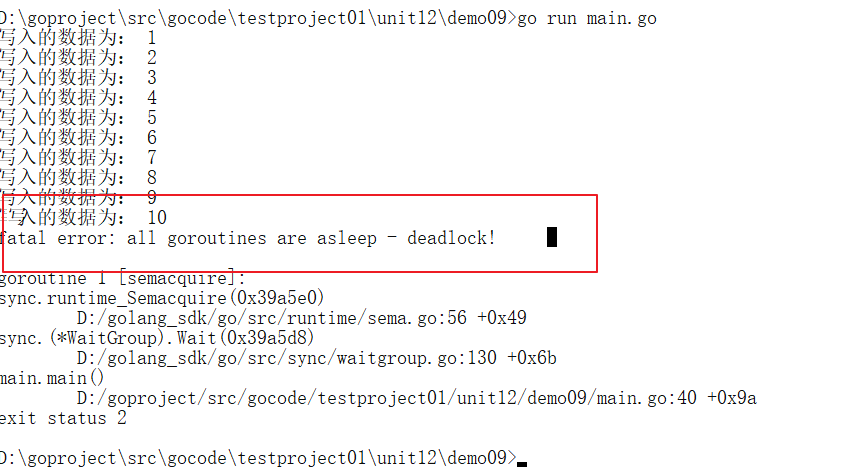
【1】当管道只写入数据,没有读取,就会出现阻塞:
go
package main

import(
        "fmt"
        _"time"
        "sync"
)
var wg sync.WaitGroup //只定义无需赋值
//写:
func writeData(intChan chan int){
        defer wg.Done()
        for i := 1;i <= 10;i++{
                intChan<- i
                fmt.Println("写入的数据为:",i)
                //time.Sleep(time.Second)
        }

        //管道关闭:
        close(intChan)
}

//读:
func readData(intChan chan int){
        defer wg.Done()
        //遍历:
        for v := range intChan{
                fmt.Println("读取的数据为:",v)
                //time.Sleep(time.Second)
        }
}
func main(){//主线程
        //写协程和读协程共同操作同一个管道-》定义管道:
        intChan := make(chan int,10)

        wg.Add(2)
        //开启读和写的协程:
        go writeData(intChan)
        //go readData(intChan)
        //主线程一直在阻塞,什么时候wg减为0了,就停止
        wg.Wait()
}
【2】写的快,读的满(管道读写频率不一致),不会出现阻塞问题:
go
package main

import(
        "fmt"
        "time"
        "sync"
)
var wg sync.WaitGroup //只定义无需赋值
//写:
func writeData(intChan chan int){
        defer wg.Done()
        for i := 1;i <= 10;i++{
                intChan<- i
                fmt.Println("写入的数据为:",i)
                //time.Sleep(time.Second)
        }

        //管道关闭:
        close(intChan)
}

//读:
func readData(intChan chan int){
        defer wg.Done()
        //遍历:
        for v := range intChan{
                fmt.Println("读取的数据为:",v)
                time.Sleep(time.Second)
        }
}
func main(){//主线程
        //写协程和读协程共同操作同一个管道-》定义管道:
        intChan := make(chan int,10)

        wg.Add(2)
        //开启读和写的协程:
        go writeData(intChan)
        go readData(intChan)
        //主线程一直在阻塞,什么时候wg减为0了,就停止
        wg.Wait()
}